Buying Land in Eastern North Carolina: What to Check Before You Make an Offer
By Carroll Harrod · Salt & Soil Realty Group
This article uses Onslow County mapping and septic resources along with North Carolina Real Estate Commission guidance on due diligence. Existing Salt & Soil articles provide the deeper explanations of wetlands, flood zones, coastal permits, and conservation easements. Salt & Soil Realty Group is a real estate brokerage, not a surveyor, engineer, septic installer, or environmental consultant. This post is educational; confirm land, wetland, septic, and access questions with licensed professionals before closing. See **buying land in Eastern NC (septic & wetlands), **looking for acreage in Onslow County, and wetlands for coastal NC land buyers. Carroll Harrod with Salt & Soil Realty Group helps buyers of land and rural property in **Jacksonville, NC**, Onslow County, and Coastal North Carolina—including septic, wetlands, and access due diligence. ---
Buying Land in Eastern North Carolina: What to Check Before You Make an Offer
Buying land gives you the chance to create a property that may be hard to find ready-made. That could mean a house with room for a shop, enough acreage for animals, a small homestead, hunting land, timber, or simply more space between you and the next property. The acreage and asking price matter, but they do not tell you whether the parcel fits what you want to do. A smaller tract with good access, usable high ground, and a straightforward utility plan may be a better purchase than a larger tract that needs expensive site work. Before making an offer on land in Eastern North Carolina, start with the plan and work backward.
Start With What You Want the Land to Do
“Land” can mean very different things to different buyers. One person may want a simple homesite. Another may need room for a barn, detached garage, animals, equipment, or a second dwelling later. A tract purchased for hunting or timber does not need to meet the same requirements as land intended for a four-bedroom house. Write down the uses that matter before you get too attached to a parcel:
- Approximate house size and bedroom count
- Garage, shop, barn, or storage buildings
- Animals, pasture, or gardening
- RV, boat, or equipment parking
- A manufactured or modular home
- A second dwelling or future subdivision
Hunting, timber, or recreational use
Specific plans lead to better answers. Asking the county whether land is “buildable” may not tell you much. Asking whether the parcel can support a four-bedroom house, a detached shop, and two horses gives officials and contractors something concrete to evaluate.
Confirm Legal and Physical Access
A driveway or worn path does not always prove that a parcel has permanent legal access. The property may front a public road, or it may depend on a recorded easement across neighboring land. If access is private, find out where the easement runs, how wide it is, and who maintains the road. Then consider whether the access works physically. A narrow lane, weak culvert, deep ditch, or low wet section may be fine for a pickup but difficult for concrete trucks, well equipment, utility crews, or emergency vehicles. That does not necessarily make the property a bad buy. It may simply mean the driveway needs to be improved and priced into the project. Onslow County GIS can help buyers review parcel lines, roads, soils, zoning, and flood layers, but the county notes that GIS data represents recorded information and should not replace a current survey when boundaries or access matter. (Onslow County Maps)
Check Septic, Water, and Power Early
Many rural parcels in Eastern North Carolina are not connected to public sewer, so the septic plan often shapes the entire homesite. In Onslow County, a soil evaluation—often called a perk test—is used when someone wants to place a septic system, move the proposed system, or change the permitted bedroom count. (Onslow County) The bedroom count matters because septic approval is tied to expected wastewater use. A parcel may support a smaller house but not the larger floor plan you had in mind. The approved septic area can also affect where the driveway, shop, pool, or future addition goes. Water and power need the same property-specific review. “Water available” may mean a public line is nearby, not that a tap is already approved or inexpensive. “Power at the road” does not tell you what it will cost to reach a homesite several hundred feet back. Before making an offer, get a clearer picture of:
- Public water versus a private well
- Public sewer versus septic
- Distance from power to the homesite
- Utility easements
Internet availability at the actual address
We will cover septic, wells, and utility extensions in separate cluster articles so buyers can dig into those topics without turning this overview into a technical manual.
Look at Usable Acreage, Not Just Total Acreage
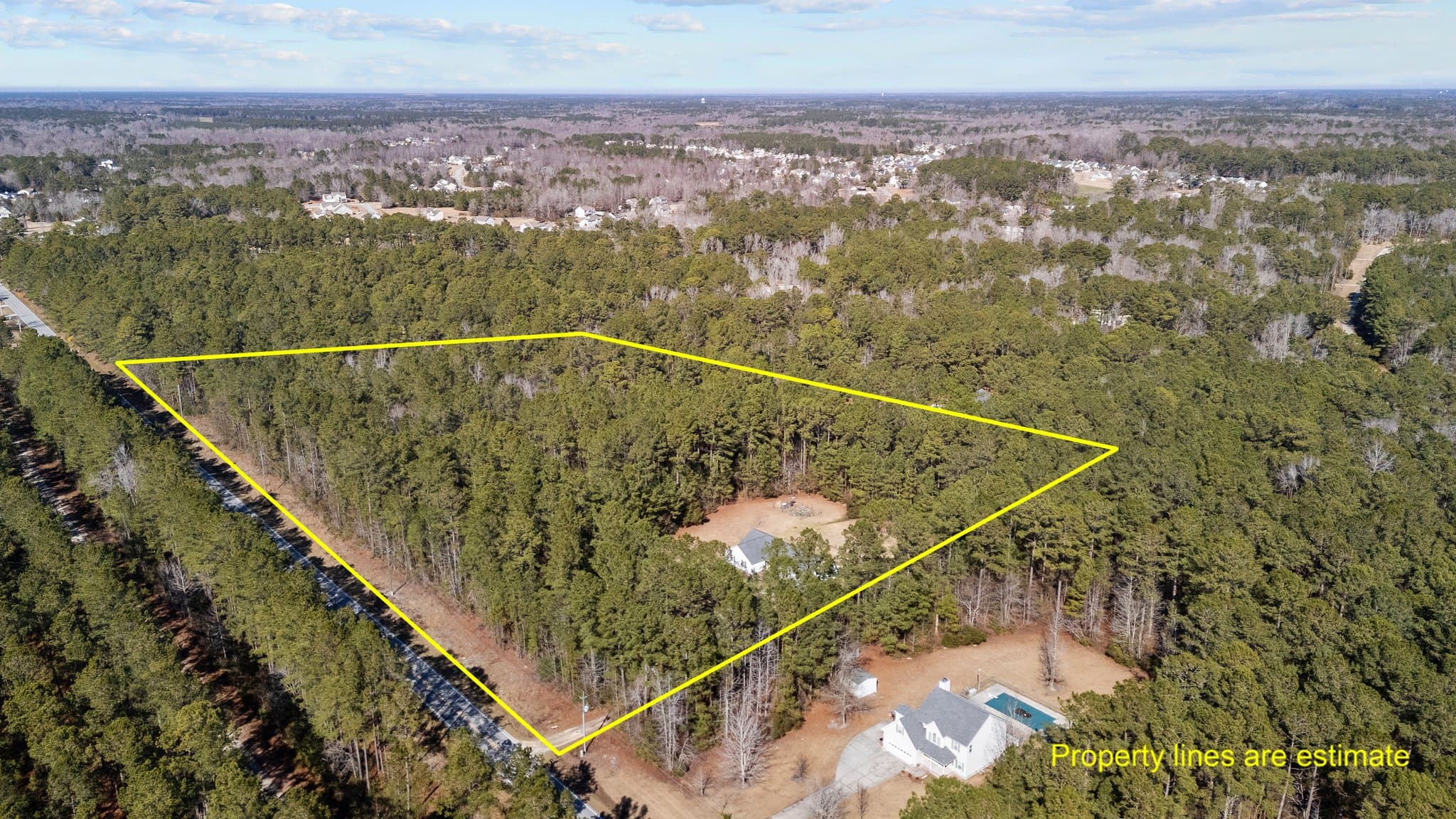
Ten acres on paper does not always mean ten acres available for the house, pasture, shop, and yard. Part of a tract may contain wetlands, floodplain, drainage areas, steep ditches, road easements, timber, or low ground. Those acres are not necessarily worthless. They may provide privacy, wildlife habitat, hunting, timber, or natural drainage. The question is how much of the property works for your intended improvements. Wetlands can affect where a house, driveway, septic system, or outbuilding can go, but they do not automatically make a parcel unusable. A larger tract may have wet areas and still offer plenty of suitable upland. County and state maps can help flag possible wetlands, while a professional review may be appropriate when the building plan is close to a questionable area. Salt & Soil’s guide to wetlands in Coastal North Carolina explains the difference between wet ground, mapped wetlands, floodplain, and a professional determination in more detail. (Salt & Soil Realty Group) For more on flood maps, drainage, elevation, and insurance, see our guide to flood zones and insurance costs in the Jacksonville area.
Verify Zoning and Recorded Restrictions
Zoning tells you what the local government permits. Recorded restrictions, easements, and covenants can add another set of rules. Do not rely only on a listing description that calls the land “unrestricted.” A parcel may have no subdivision covenants and still be subject to zoning, setbacks, septic rules, floodplain requirements, road agreements, or subdivision standards. Contact the planning department and describe the actual plan. Ask about the house type, animals, outbuildings, business use, second dwelling, or future division of the parcel. Title work may also uncover private restrictions or a conservation easement. Salt & Soil’s guide to conservation easements in North Carolina explains how those agreements can affect development, farming, forestry, resale, and future ownership. (Salt & Soil Realty Group) Waterfront and near-water parcels may raise additional CAMA or coastal permitting questions. Those are covered in our separate guide to buying land in Coastal North Carolina. (Salt & Soil Realty Group)
Estimate the Cost of Making the Land Usable
The asking price is only the first part of the land budget. Depending on the parcel, the buyer may also need to pay for a survey, driveway, culvert, clearing, grading, septic system, well, water tap, power extension, drainage work, permits, and professional services. This is where an apparently expensive parcel may turn out to be the better deal. Land with confirmed access, a workable septic area, nearby power, and a clear homesite may cost less to finish than cheaper acreage with several unanswered questions. Compare parcels by asking:
- What will this property cost by the time it is ready for the way I plan to use it? That is usually more useful than comparing price per acre alone.
Leave Enough Time for Due Diligence
North Carolina’s due-diligence period is the buyer’s opportunity to investigate the property and transaction. NCREC notes that buyers may use this time to review items such as septic, surveys, title, financing, and property condition. (NCREC Bulletins) Land investigations may involve a surveyor, soil evaluator, builder, utility company, planning office, engineer, or environmental professional. Those appointments do not always happen quickly. Before writing the offer, decide which answers you need and how long they are likely to take. The due-diligence fee is generally paid to the seller and is ordinarily nonrefundable if the buyer terminates, so the amount and timeline should reflect the uncertainty of the parcel. (NCREC Bulletins)
Bottom Line
Buying land in Eastern North Carolina can be an excellent way to build a property around your own priorities. The strongest purchases are usually not the parcels with no questions. They are the ones where the answers fit the plan. Confirm the access. Understand the septic and utility options. Look at usable acreage rather than total acreage alone. Check the rules, estimate the site costs, and give yourself enough time to investigate before the due-diligence deadline. Salt & Soil Realty Group helps buyers evaluate land, acreage, and rural property throughout Onslow County and Eastern North Carolina. Carroll Harrod can help organize the early questions and identify which professionals should be involved before an offer becomes a commitment.
Frequently Asked Questions
What should I check first when buying land in Eastern North Carolina?
Start with the intended use, then confirm legal access and whether the parcel can support the needed septic or sewer arrangement. Those answers often determine where the house and other improvements can go.
No. Total acreage matters less than how much of the land works for your plan. A smaller parcel with good access, usable upland, utilities, and a clear homesite may offer better value than a larger tract with substantial improvement costs.
Usually not. The term may mean there are no known private covenants, but zoning, setbacks, septic rules, easements, wetlands regulations, floodplain requirements, and subdivision rules may still apply.
When a property will require septic, confirming soil suitability and the supported bedroom count can remove a major uncertainty. Whether that investigation is completed before closing depends on the contract, due-diligence period, and buyer’s risk tolerance.
There is no universal period. It should reflect the time needed for the specific parcel, which may include a survey, soil evaluation, utility research, title review, builder visit, or environmental investigation.
Research References
Onslow County GIS Onslow County Soil Evaluations Onslow County Septic Systems NCREC: Due Diligence Questions and Answers NCREC: Due Diligence Fees --- Questions about land or rural property in Coastal North Carolina? **Contact Salt & Soil Realty Group**.