Looking for Acreage in Onslow County? What Rural Buyers Need to Know Before They Make an Offer
By Carroll Harrod · Salt & Soil Realty Group
Acreage sounds simple until you start asking what you can actually do with it.
A few acres outside Jacksonville. A wooded tract near Richlands. A rural home outside city limits. A property with room for a garden, a shop, chickens, a barn, equipment, or more breathing room. Maybe it already has a house. Maybe it is raw land. Maybe it looks right from the road.
Then the real questions start.
Salt & Soil Realty Group is a real estate brokerage, not a surveyor, engineer, septic installer, or environmental consultant. This post is educational; confirm land, wetland, septic, and access questions with licensed professionals before closing.
See buying land in Eastern NC, buying a home with land near Jacksonville, and what is NRCS for NC landowners.
Carroll Harrod with Salt & Soil Realty Group helps buyers of land and rural property in Jacksonville, NC, Onslow County, and Coastal North Carolina—including septic, wetlands, and access due diligence.
Can it support a septic system?
- Is there a well?
- Is the driveway legal?
- Is the road public or private?
- Can you build another structure?
- Can you keep animals there?
- Is part of the land wet?
- Can you get internet?
- Is it in a flood zone?
- Is the back acreage usable, or does it only look good in the listing description?
That is why buying acreage in Onslow County is different from buying a standard home in a subdivision. You are not just buying bedrooms, bathrooms, and square footage. You are buying land, access, utilities, restrictions, drainage, and future options.
Those details can make or break the deal.
Quick Answer: What Should Buyers Check Before Buying Acreage in Onslow County?
Before buying acreage in Onslow County, check septic, well or water availability, legal access, road maintenance, floodplain, wetlands, zoning, deed restrictions, utility availability, internet access, survey needs, easements, financing, and whether the property can support your intended use.
North Carolina’s due diligence period gives buyers time to investigate the property and transaction. NCREC explains that due diligence may include home, pest, and septic inspections, property survey, appraisal, title search, loan qualification, repair negotiation, and other inquiries that affect whether the buyer moves forward. (NCREC Bulletins)
For acreage, that investigation matters even more.
The question is not just:
- How many acres is it?
- The better question is:
- How many usable acres does it have for what I want to do?
The Acreage Number Is Only the Beginning
A listing may say 3 acres, 5 acres, 10 acres, or 20 acres.
That number matters, but it does not tell the whole story.
A 5-acre property with a dry homesite, legal access, usable yard, septic approval, room for a shop, and clear utility options may be more useful than a 12-acre tract where most of the land is wet, inaccessible, restricted, or expensive to improve.
Acreage should be evaluated by function, not just size.
Before you make an offer, ask what part of the land is actually usable for your goals. That may include a homesite, septic area, repair area, driveway, garden, pasture, fencing, outbuildings, parking, or future resale flexibility.
A property does not need to be perfect. It needs to work.
Decide What You Actually Want the Acreage to Do
Before you start comparing tracts, get specific about your intended use.
Are you looking for:
- A house with more yard?
A garden or small homestead setup?
- Room for chickens, goats, horses, or other animals?
- Pasture potential?
- A future barn, shop, or detached garage?
- Privacy from nearby homes?
- Hunting or recreation?
- Timber or wooded land?
- A second homesite?
- A manufactured or modular home site?
- A place to park equipment?
- Room for a pool?
- A long driveway?
- No HOA?
- Future resale flexibility?
- Those are not the same goal.
A wooded tract may offer privacy but require clearing. Open land may be easier to use but may have drainage concerns. A rural home may already have septic and well, but the existing systems may limit future expansion.
The clearer you are upfront, the more useful your due diligence becomes.
Septic Is One of the First Questions
In many rural parts of Onslow County, public sewer may not be available. That means the property may depend on a septic system.
If there is already a home on the property, you need to understand the existing septic system.
If the land is vacant, you need to know whether the soil can support the type of home you want to build.
Do not assume acreage automatically means septic approval.
Onslow County’s soil evaluation page explains that the septic permitting process includes three permits: an Improvement Permit, Construction Authorization, and Operation Permit. The Improvement Permit is the first permit and states the type of septic system and the number of bedrooms. (Onslow County)
That bedroom count matters.
A property may be approved for one size home but not another. If you want a larger home, additional bedrooms, or future expansion, septic capacity needs to be reviewed early.
Septic Questions to Ask
Before you get too excited about acreage, ask:
- Is the property on septic or sewer?
- Is there an existing septic permit?
- What bedroom count does the permit support?
- Where is the septic system located?
- Where is the repair area?
- Has the system been inspected recently?
- Has the system ever been repaired?
- If vacant, has the property had a soil evaluation?
- Was a septic application approved or denied?
- Would an engineered or advanced system be needed?
- Does the intended home size match what the site can support?
Onslow County notes that if soil is unsuitable after evaluation, the owner or legal representative receives a turn-down letter; if the soil can be permitted, an Improvement Permit is issued. (Onslow County)
That is why septic should be near the top of the due diligence list, not something you check after you are emotionally committed to the land.
Do Not Forget the Septic Repair Area
A septic repair area is easy to overlook.
Buyers may see a big open yard and start planning a shop, pool, garden, fence, or barn. But if that area is reserved for a future septic repair field, it may not be available for those improvements.
This does not mean the land is bad.
It means the layout matters.
The septic system can affect:
- House placement
- Driveway layout
- Well location
- Shop or barn placement
- Future pool plans
- Fencing
- Tree clearing
- Garden location
- Additions
Resale value
Ask for septic records early. If records are unclear, build enough time into due diligence to get better answers.
Well, Public Water, and Utility Details
Some acreage properties in Onslow County are connected to public water. Some rely on private wells. Some have water nearby but not connected. Some vacant tracts may need a new well.
Those details affect cost, timeline, and confidence.
Ask:
- Is public water available?
- Is the property already connected?
- Is there a tap fee?
- Is a private well needed?
- If there is a well, has it been tested?
- Where is the well located?
- Does the well location conflict with future plans?
- Is there public sewer, or only septic?
- Who provides electric service?
- How far is power from the likely homesite?
- Is internet available at the property?
- Is propane needed?
- Are there utility easements?
A rural property can look affordable until you price the cost of bringing utilities where they need to go.
Access Is Not Just a Driveway
Access is one of the biggest rural property issues.
A buyer may see a driveway, farm path, dirt road, or cleared trail and assume access is fine.
That is not enough.
Access needs to be legal, practical, and lender-friendly.
Before making an offer, ask:
- Does the property front a public road?
- Is the road state-maintained?
- Is the road private?
- Is there a recorded easement?
- Is there a road maintenance agreement?
- Who maintains the road?
- Can the buyer improve the driveway?
- Can utilities cross the easement?
- Is the access wide enough?
- Can emergency vehicles reach the home?
- Would a lender accept the access?
- This is not a handshake issue.
If access is not clear in the deed, survey, or recorded documents, slow down and get it reviewed.
Public Road, Private Road, or Easement?
These are not the same thing.
Public road frontage
Public road frontage is often the simplest access situation, but buyers should still verify driveway permits, sight distance, setbacks, utility access, and any road-widening or right-of-way concerns.
Private road
A private road may be workable, but buyers should understand who maintains it, who pays for repairs, whether there is a written maintenance agreement, and whether the road condition could affect financing, insurance, or resale.
Easement access
Easement access can work well when it is properly written, recorded, wide enough, and clear about use and maintenance.
The risk is vague language.
If an easement does not clearly allow residential access, utilities, maintenance, or improvements, it may not support the buyer’s plans. Have the closing attorney review it before you rely on it.
Floodplain and Drainage Matter in Onslow County
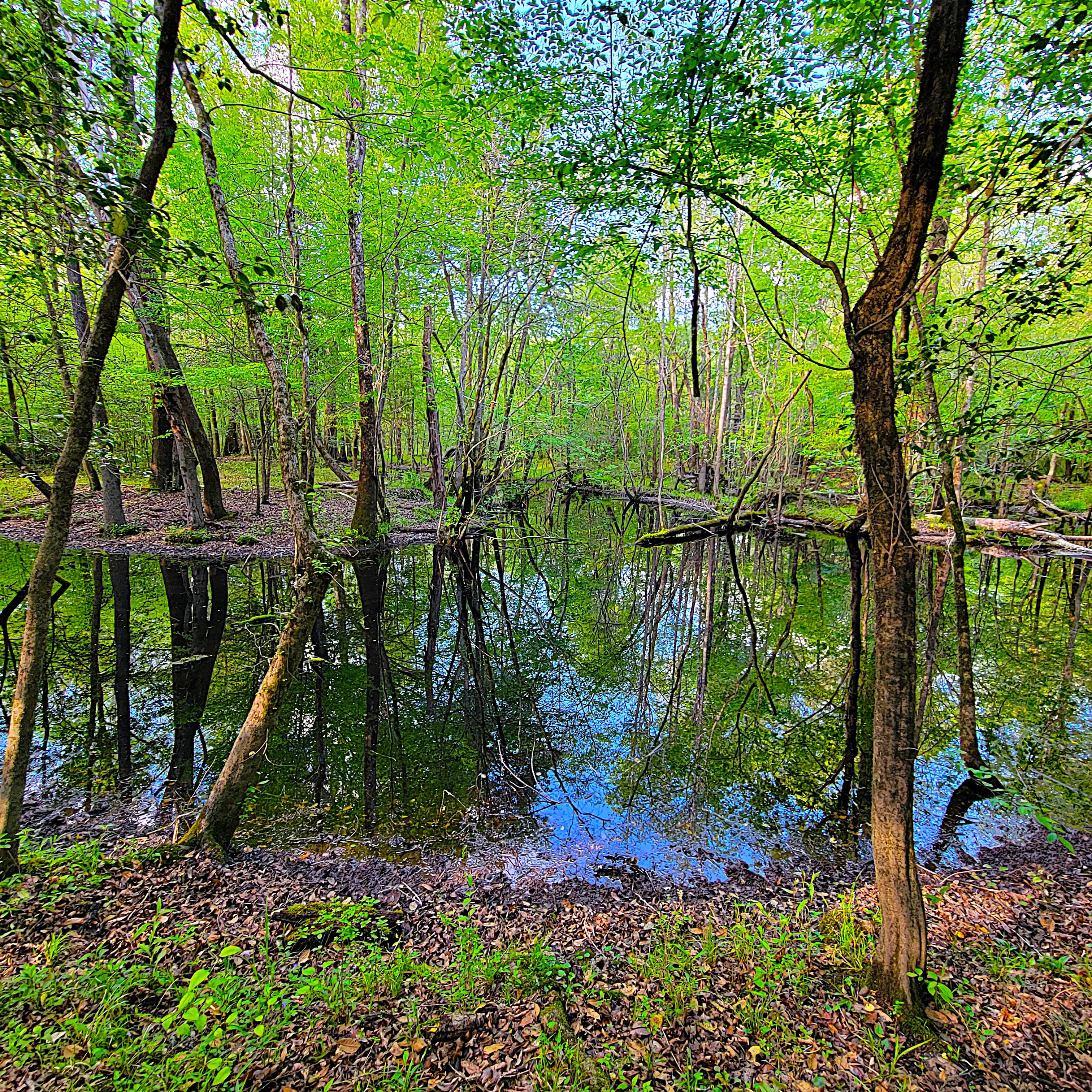
Onslow County is coastal plain country, and buyers should pay attention to floodplain, elevation, ditches, wetlands, drainage, and low areas.
A property does not have to be waterfront to have water-management concerns.
FEMA’s Flood Map Service Center is the official public source for flood hazard information produced for the National Flood Insurance Program, and FEMA notes that flood maps are updated over time. (FEMA Flood Map Service Center) Onslow County’s own maps page also points users to zoning maps, GIS, NC FRIS flood maps, floodplain management resources, and related planning tools. (Onslow County)
Before buying acreage, look at:
- FEMA flood zone
- County flood map layers
- Elevation
- Soil drainage
- Road access during heavy rain
- Ditches and swales
- Creek or branch locations
- Ponding after storms
- Driveway route
- Proposed homesite
- Crawl space elevation
- Existing drainage patterns
Neighboring property elevation
A property can have a good homesite and still have low areas elsewhere. That may be fine, but the buyer should understand which parts of the acreage are buildable, usable, wet, restricted, or likely to require extra work.
Flood Insurance Is Not the Only Flood Question
Buyers often ask, “Will I need flood insurance?”
That is a good question.
It is not the only question.
Also ask:
- Can I access the property during heavy rain?
- Is the driveway low?
- Does water cross the road?
- Is the proposed homesite elevated enough?
- Will fill be needed?
Will permits be required?
- Does the current house have an elevation certificate?
- Are there known drainage problems?
- Are there county floodplain development requirements?
Will floodplain affect future structures?
Insurance is one part of flood risk. Usability is the bigger conversation.
Wetlands Can Affect More Than the Back Corner
Wetlands are not always obvious from the road.
Some look like standing water and swamp vegetation. Others may look like ordinary woods during a dry period.
NCDEQ’s wetlands permitting guidance explains that impacts to streams, wetlands, open waters, ponds, lakes, and riparian buffers may be regulated, and that activities such as placing material in wetlands or streams, disturbing soil or water flow, or damming a stream channel can require permitting. (North Carolina Wetlands)
Wetlands can affect:
- Build site location
- Driveway layout
- Clearing
- Fill
- Pond construction
- Ditching
- Road crossings
- Pasture plans
- Future subdivision
- Timber work
- Permitting
Resale value
This does not mean wetland acreage is bad. Some buyers value wetland areas for wildlife, privacy, natural beauty, or recreation.
But wetland acreage should be understood for what it is. It may not support the same uses as dry upland acreage.
If wetlands are suspected, get a qualified professional involved before closing.
CAMA Can Matter Near Water and Coastal Resources
CAMA is not only an oceanfront issue.
Onslow County is one of North Carolina’s CAMA counties. NCDEQ says that if you are planning to develop in a CAMA county, you should check whether the project is in an Area of Environmental Concern because a CAMA permit may be required. (NC Department of Environmental Quality)
Onslow County explains that Areas of Environmental Concern are the foundation of CAMA regulations and may include property in or on navigable waters, on marsh or coastal wetlands, within certain distances of estuarine shorelines, near inlets, near ocean beaches, or near other protected coastal resources. (Onslow County)
CAMA may affect:
- Docks
- Bulkheads
- Shoreline work
- Fill
- Land disturbance
- Construction location
- Setbacks
- Marsh or estuarine areas
- Access paths
Boat-related improvements
A buyer should not assume, “It is my land, so I can build wherever I want.”
That is not how coastal property works.
Zoning and Land Use: Do Not Rely on the Listing Alone
A listing may say “bring your animals,” “unrestricted,” “build your dream home,” or “homestead potential.”
Those phrases are not permits.
Before making an offer, verify zoning, deed restrictions, and allowed uses.
Ask:
- What is the zoning?
- Is the property inside a municipality, ETJ, or unincorporated county area?
- Are manufactured homes allowed?
- Are modular homes allowed?
- Are RVs allowed temporarily or long term?
- Are accessory structures allowed before a house?
- Are animals allowed?
- Are there minimum lot sizes?
- Are there setback requirements?
- Are there restrictions on business use?
- Is subdivision possible?
- Is there CAMA involvement near water?
- Are there recorded covenants?
- Is there an HOA or road agreement?
Onslow County GIS maintains layers such as zoning, tax parcels, soils, flood zones, E911 streets, fire districts, and other mapping data, which can be useful starting points for research. (Onslow County) But GIS research should not replace deed review, survey work, county confirmation, or attorney review when the issue matters.
Horses, Chickens, Goats, Gardens, and Small Homestead Plans
A lot of acreage buyers are not just looking for space.
They want to use the land.
Maybe that means chickens, goats, horses, a garden, greenhouse, bees, fruit trees, a small orchard, a barn, or fenced pasture.
That is where the details matter.
Before buying, think about:
- Zoning
- Covenants
- HOA rules
- Setbacks
- Fencing
- Soil drainage
- Pasture quality
- Water source
- Shade
- Shelter
- Manure management
- Neighboring land uses
- Road access for feed or equipment
- Trailer access
Barn or shed permits
Acreage is not automatically pasture.
Wooded land may need clearing. Cleared land may need fencing. Low land may not handle animals well during wet seasons. Poorly drained soils can affect pasture plans.
The land has to match the use.
City Limits vs County Property
Onslow County buyers should pay attention to whether a property is inside Jacksonville city limits, inside another municipality, in an ETJ, or in unincorporated county area.
This can affect:
- Tax bills
- Trash service
- Water and sewer
- Septic and well
- Permitting
- Zoning
- Animal rules
- Accessory structures
- Rental rules
- Business use
- Future development nearby
- Road maintenance
Utility providers
That does not make one better than the other.
It just means the same acreage number can come with different rules, costs, and responsibilities depending on jurisdiction.
Outbuildings, Barns, Shops, and Storage
Acreage buyers often care about more than the house.
They may want a shop, barn, detached garage, equipment shed, greenhouse, chicken coop, run-in shelter, or storage building.
Before assuming those improvements are possible, check:
- Setbacks
- Zoning
- Building permits
- Septic repair area
- Floodplain
- Utility easements
- HOA or deed restrictions
- Height limits
- Electrical permits
- Driveway access
- Drainage
Soil stability
If an outbuilding already exists, ask whether it was permitted and whether it has power, water, plumbing, or structural issues.
A useful shop can add value for the right buyer. An unpermitted or poorly placed structure can create questions during resale, insurance, appraisal, or financing.
Manufactured and Modular Homes
In Onslow County, some buyers look for acreage because they want flexibility for a manufactured home or modular home.
Do not assume every tract allows that.
Before buying, verify:
- Whether manufactured homes are allowed by zoning
- Whether deed restrictions prohibit them
- Whether there are age, size, or foundation requirements
- Whether a zoning permit is required
- Whether a septic permit supports the intended home
- Whether the driveway and site can handle setup
- Whether financing fits the property and home type
Whether floodplain or elevation requirements apply
Modular and manufactured homes are not always treated the same way, so buyers should ask clear questions early.
Internet and Cell Service Are Real Due Diligence Items
Internet access is not a luxury question for many rural buyers.
It affects work, school, streaming, security systems, smart-home features, and resale.
Before buying rural acreage, verify internet and cell service directly.
Do not rely only on a coverage map if the connection matters to daily life.
Ask:
- Which providers serve the address?
- Is fiber available?
- Is cable available?
- Is fixed wireless available?
- Is satellite the only option?
- What speeds are actually available?
- Are there installation costs?
- Does driveway length affect service?
- How is cell service at the homesite, not just at the road?
A property can be beautiful and still be frustrating if connectivity does not match your needs.
Soil Maps Are a Starting Point, Not the Final Word
Soil information can be helpful when evaluating acreage.
It may offer clues about drainage, farmland potential, septic limitations, woodland suitability, hydric soils, and general land capability.
But soil maps are not the same as a site-specific evaluation.
Use them to ask better questions, not to make final assumptions.
For septic, building, pasture, road work, pond construction, and drainage projects, buyers may still need input from environmental health, a soil scientist, engineer, surveyor, contractor, or other qualified professional.
Survey Before You Fence, Build, or Assume
GIS maps are useful for research, but they are not boundary surveys.
Before buying acreage, especially if you plan to fence, clear, build, add a driveway, or rely on a specific corner or access point, consider whether a survey is needed.
A survey can help identify:
- Boundary lines
- Road frontage
- Easements
- Encroachments
- Acreage discrepancies
- Fence line issues
- Driveway placement
- Relationship between structures and property lines
Shared access questions
A fence line is not always the property line.
A mowed path is not always the easement.
A tax map is not always survey-accurate.
Rural Financing Is Different
Financing acreage is not always the same as financing a standard house.
Depending on the property and intended use, buyers may need:
- Cash
- Land loan
- Construction-to-permanent loan
- Farm Credit-style financing
- Seller financing
- Conventional financing with a house already present
VA, FHA, or USDA financing if buying a qualifying improved property
Raw land can require different down payment, term, rate, and underwriting expectations than a typical home purchase.
USDA’s Single Family Housing Guaranteed Loan Program may help eligible buyers purchase, build, rehabilitate, improve, or relocate a dwelling in an eligible rural area, but the program has income, occupancy, lender, property, and eligibility requirements. USDA also states that buyers can use the eligibility site to check a specific address or review eligible areas. (Rural Development)
If the buyer plans to build, the lender may care about:
- Legal access
- Septic permit
- Well or water plan
- Buildability
- Appraisal
- Contractor
- Construction budget
- Survey
- Zoning
- Utilities
- Floodplain
Road maintenance
Do not wait until after you are under contract to ask whether the property can be financed the way you expect.
How to Structure an Offer on Acreage
When buying acreage, the offer should give you enough time to investigate the land.
Depending on the property, due diligence may need to cover:
- Septic records
- Soil evaluation
- Well records or water testing
- Survey
- Floodplain review
- Wetlands review
- Zoning confirmation
- Deed restrictions
- Road access
- Easement language
- Utility availability
- Internet availability
- Insurance quotes
- Financing approval
- Contractor or builder input
- CAMA or waterfront questions
Attorney review
A short due diligence period may work for a simple resale home.
It may not be enough for acreage with unanswered questions.
The more complicated the buyer’s intended use, the more careful the offer timeline should be.
Due Diligence Money and Risk
In North Carolina, due diligence is serious.
Buyers should be thoughtful before offering a large due diligence fee on a property where major land questions are still unanswered.
That does not mean strong terms are never appropriate. It means the strength of the offer should match your confidence in the property.
If you do not yet know whether the land will support septic, whether access is legal, whether floodplain affects the homesite, or whether your intended use is allowed, you need to be careful.
The best offer is not just the one that gets accepted.
It is the one that protects you while you figure out whether the property actually works.
Rural Homes With Acreage: Evaluate the House and the Land
When a home sits on acreage, buyers need to evaluate both the structure and the land.
The house may have:
- Roof issues
- HVAC age
- Crawl space moisture
- Plumbing concerns
- Electrical concerns
- Foundation questions
- Pest damage
- Old windows
- Deferred maintenance
- The land may have:
- Septic limitations
- Well concerns
- Drainage problems
- Easement issues
- Wetlands
- Floodplain
- Fence repairs
- Outbuilding issues
- Private road maintenance
Utility gaps
A buyer can love the house and miss the land problem.
Or love the land and underestimate the house problem.
You need to evaluate both.
Questions to Ask Before You Make an Offer
Before making an offer on acreage in Onslow County, ask:
- What exactly do I want to use the land for?
- Is that use allowed?
- Is the property inside city limits, an ETJ, or unincorporated county?
- What is the zoning?
- Are there deed restrictions or covenants?
- Is there an HOA or road maintenance agreement?
- Is the access public, private, or by easement?
- Is the road maintained by the state, county, owners, or nobody clearly?
- Is there public water, a well, or no water source yet?
- Is there public sewer, septic, or no approved wastewater plan yet?
- Is there a septic permit?
- What bedroom count does the septic support?
- Where are the septic and repair areas?
- Is any of the land in a floodplain?
- Are there wetland concerns?
- Is CAMA involved?
- Is internet available at the homesite?
- Can I build the structures I want?
- Can I keep the animals I want?
- Do I need a survey?
- Can my lender finance this property?
- What would make me walk away?
- That last question matters.
Know your deal-breakers before you are emotionally attached.
Red Flags to Slow Down For
These do not always mean “do not buy.”
They do mean “do not rush.”
Watch for:
- No septic permit on vacant land
- Old or unclear septic records
- Prior septic denial
- Unclear legal access
Private road with no maintenance agreement
Listing says “buyer to verify everything”
Floodplain over the proposed homesite
Wetland indicators near the driveway or build site
No survey
Boundary uncertainty
GIS acreage that does not match deed or survey
Restrictive covenants you have not read
Power far from the homesite
No confirmed internet option
Manufactured home assumptions without zoning verification
Existing outbuildings with unknown permit history
Price that seems low without a clear explanation
A good rural property can have complications.
The issue is not whether complications exist. The issue is whether you understand them before closing.
What Salt & Soil Looks at With Acreage Buyers
When Salt & Soil Realty Group walks acreage with a buyer, the goal is not just to admire the land.
It is to understand how the property works.
That means looking at:
- Where the driveway may make sense
- Where the land appears to hold water
- Where the high ground may be
- Where septic and repair areas may go
- Whether the back acreage is reachable
- Whether there are obvious wetland indicators
- Whether the road is practical
- Whether there are ditches, low spots, or drainage concerns
- Whether outbuildings are useful or problematic
- Whether the property matches the buyer’s intended use
What needs to be verified before the buyer is fully committed
That is the difference between buying land because it looks good and buying land because it actually fits.
Bottom Line
Acreage in Onslow County can be a strong fit for buyers who want more space, more flexibility, rural property, a homestead setup, a workshop, animals, privacy, or room to grow.
But acreage is not automatically usable just because the listing says it is.
Before you make an offer, check the details that matter:
Septic. Well. Water. Sewer. Access. Road maintenance. Floodplain. Wetlands. Zoning. CAMA. Deed restrictions. HOA rules. Utilities. Internet. Survey. Financing. Future plans.
The land does not have to be perfect.
It just has to work for what you need it to do.
Carroll Harrod and Salt & Soil Realty Group help buyers evaluate acreage, rural homes, land, and homestead-friendly properties across Jacksonville, Onslow County, and broader Eastern North Carolina. A property-specific due diligence plan can help you separate land that only looks good online from land that can actually support your plans.
Frequently Asked Questions
Is buying acreage in Onslow County different from buying a regular house?
Yes. With acreage, buyers need to evaluate the land as much as the house. Septic, well, access, road maintenance, floodplain, wetlands, zoning, deed restrictions, utilities, internet, surveys, and financing can all affect whether the property works.
Start with intended use, septic, access, water, zoning, and floodplain. If the property does not support your intended use, the acreage number does not matter much.
No. Septic approval depends on soil conditions, drainage, system type, setbacks, repair area, and county review. Onslow County’s soil evaluation process includes an Improvement Permit that states the septic system type and number of bedrooms. (Onslow County)
No. Some wetlands are easy to see, but others may look like ordinary woods during dry conditions. If wetlands are suspected, buyers should get qualified help before closing because wetlands can affect clearing, building, fill, driveway placement, pond construction, and future use.
Often, yes. GIS maps are useful for research, but they are not the same as a boundary survey. A survey can help confirm boundary lines, easements, road frontage, encroachments, acreage discrepancies, and access points.
Research References
North Carolina Real Estate Commission — due diligence questions and answers. (NCREC Bulletins)
Onslow County — soil evaluations and septic permitting process. (Onslow County)
Onslow County — septic systems and existing septic system resources. (Onslow County)
Onslow County — maps, GIS, zoning, flood maps, and land-use resources. (Onslow County)
FEMA — Flood Map Service Center. (FEMA Flood Map Service Center)
NCDEQ / NC Wetlands — wetlands permitting overview. (North Carolina Wetlands)
NCDEQ and Onslow County — CAMA counties and Areas of Environmental Concern. (NC Department of Environmental Quality)
USDA Rural Development — Single Family Housing Guaranteed Loan Program eligibility and rural-area guidance. (Rural Development)
Questions about land or rural property in Coastal North Carolina? Contact Salt & Soil Realty Group.