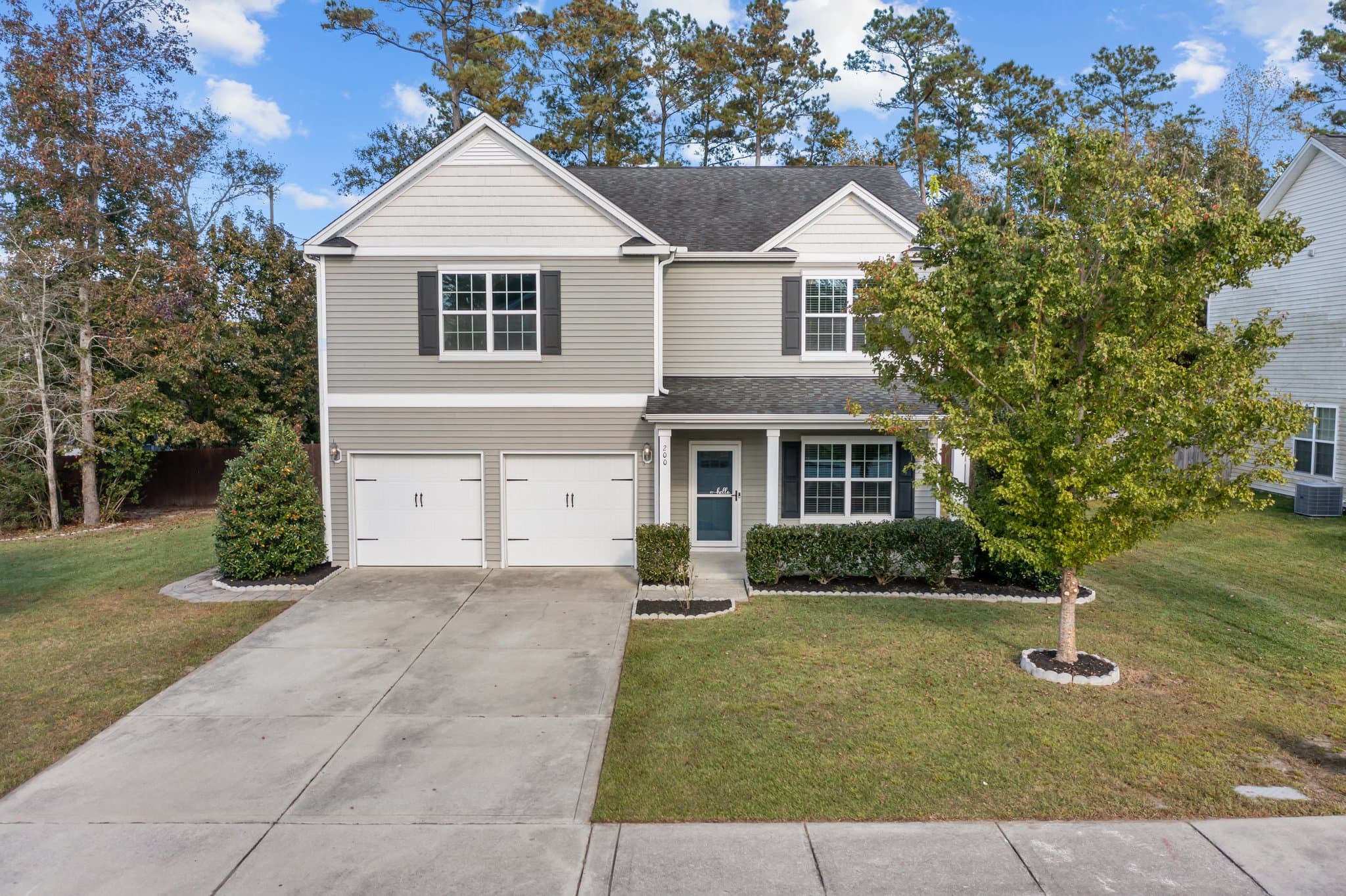
Tax Benefits of Investment Property: Why a Cash Flow Negative Rental Can Still Make Sense
By Carroll Harrod · Salt & Soil Realty Group
A rental property can look weak on monthly cash flow and still be useful in a larger financial plan. That does not mean investors should ignore negative cash flow. Money going out every month is real. But for some owners, especially high-income earners with a heavy tax burden, the tax side of an investment property can change how the deal performs after all benefits are considered. The important phrase is for some owners. Rental real estate tax rules are powerful, but they are also limited. The same property can create a meaningful tax benefit for one investor and very little immediate tax benefit for another. Salt & Soil Realty Group is not a tax advisory firm, and we are not tax specialists. This article is meant to help investors understand the real estate side of the conversation, not to provide tax advice. Before buying, selling, depreciating, exchanging, or structuring an investment property based on tax strategy, speak with a qualified accountant or CPA who can review your specific income, filing status, investment structure, and long-term plan. Salt & Soil Realty Group is a real estate brokerage, not a CPA, financial advisor, or tax preparer. This post is educational; confirm tax and investment decisions with qualified professionals. Related reading: **real estate investing in Jacksonville and coastal Carolina and **coastal NC home seller guide. Carroll Harrod with Salt & Soil Realty Group helps investors in **Jacksonville, NC** and Coastal North Carolina evaluate acquisitions, rentals, and exit timing alongside your CPA and lender. ---
Why Real Estate Is Different From Many Other Investments
Rental real estate is not taxed only on the rent collected. The owner can generally deduct ordinary and necessary expenses for managing, conserving, and maintaining rental property. The IRS lists examples such as interest, taxes, advertising, maintenance, utilities, and insurance. Repairs and maintenance may also be deductible, while improvements are generally recovered through depreciation rather than deducted all at once. (Internal Revenue Service) That distinction matters because a rental property may show a taxable loss even when the property is holding value, paying down debt, or appreciating. This is one reason real estate can appeal to investors with higher incomes. The tax system recognizes that income-producing property has costs, wear, financing expenses, and long-term depreciation.
The Big Tax Benefit: Depreciation
Depreciation is often the tax benefit investors hear about first. In plain English, depreciation lets an owner recover the cost of income-producing property over time, even if the property may actually be stable or rising in market value. For residential rental property, IRS Publication 527 lists a 27.5-year recovery period under the General Depreciation System for residential rental buildings and structural components. (Internal Revenue Service) That creates an unusual situation. A property may: require some cash out of pocket each month reduce the loan balance through principal paydown increase in value over time still create a paper tax loss because of depreciation That paper loss is not fake, but it is also not the same as a cash loss. Depreciation is a tax deduction tied to the property’s basis and recovery schedule, not a check you write every month. This is also where professional guidance matters. Depreciation can be helpful, but it can affect future tax outcomes, including depreciation recapture when the property is sold. An accountant or CPA can help explain how depreciation may apply to your specific property and tax situation.
Why This Can Matter More for High-Income Earners
A dollar of deduction is generally more valuable to someone in a higher tax bracket than someone in a lower tax bracket. That is why high-income earners often pay close attention to real estate. But this is also where the rules get misunderstood. Many high-income earners assume rental losses can automatically offset W-2 wages, business income, or other active income. That is often not the case. Rental real estate is commonly subject to passive activity loss rules. IRS Publication 925 explains that passive activity losses are generally not allowed in the current year unless an exception applies. (Internal Revenue Service) So the tax value of a cash flow negative rental depends heavily on the owner’s full tax picture. That is why tax strategy should be reviewed with a CPA before it becomes the reason for buying a property.
The Passive Loss Rule Most Investors Need to Understand
There is a special allowance that can let some owners deduct up to $25,000 of rental real estate loss against nonpassive income if they actively participate. Active participation can include meaningful management decisions, such as approving tenants, rental terms, and expenditures. (Internal Revenue Service) However, that allowance phases out as income rises. For 2025, the IRS states that the maximum $25,000 special allowance is reduced once modified adjusted gross income exceeds $100,000 and is generally unavailable at $150,000 or more. (Internal Revenue Service) That means many high-income earners may not get the simple rental-loss deduction they expected. This does not make rental real estate useless for them. It means the benefit may come through different channels: offsetting passive income from other investments sheltering income from the rental property itself carrying forward suspended losses qualifying under real estate professional rules planning around a future sale or exchange using depreciation strategically with CPA guidance The tax benefit may be real, but it must fit the taxpayer. Investors should not assume that a rental loss will reduce their tax bill unless an accountant or CPA has reviewed how the passive activity rules apply to them. Suspended Losses Are Not Always Lost If passive losses are not currently deductible, they may be carried forward. IRS Publication 925 explains that disallowed deductions or credits can be allocated to the next tax year and treated as deductions or credits from the activity in that next year. (Internal Revenue Service) Those losses may become useful later, especially if the property produces passive income in future years or if the owner disposes of the entire interest in the activity in a qualifying taxable transaction. IRS guidance says unused passive activity losses are generally allowed in full in the year the owner disposes of the entire interest, provided certain requirements are met. (Internal Revenue Service) That is why a cash flow negative investment may still have long-term tax value, even if the benefit is not immediate. Still, suspended losses are a tax-planning issue, not a simple investment slogan. A CPA can help determine whether losses are currently usable, suspended for later, or affected by other parts of the investor’s return. Real Estate Professional Status Can Change the Equation Some investors may qualify as real estate professionals for tax purposes, but this is a specific tax standard, not just a casual description. The IRS instructions for Form 8582 say a taxpayer is a real estate professional only if more than half of the personal services performed during the year are in real property trades or businesses in which the taxpayer materially participated, and the taxpayer performed more than 750 hours of services in those real property trades or businesses. (Internal Revenue Service) For a high-income household, this can be important. If one spouse qualifies and materially participates, rental real estate losses may be treated differently than they would be for a purely passive investor. But this is not a loophole to assume casually. It requires documentation, time, participation, and careful tax advice. Anyone considering this path should work directly with a CPA before relying on real estate professional status as part of an investment strategy. Bonus Depreciation and Cost Segregation Need Careful Handling Some investors use cost segregation studies to identify shorter-life components of a property that may be depreciated faster than the building itself. This can sometimes create larger deductions earlier in ownership. Current depreciation rules also matter. IRS Publication 946 states that the One Big Beautiful Bill Act reinstated 100% special depreciation allowance for certain qualified property acquired and placed in service after January 19, 2025, though the rules depend on the type of property and elections made. (Internal Revenue Service) This is an area where investors need professional help. Accelerated depreciation can improve near-term tax results, but it can also affect future basis, depreciation recapture, financing strategy, and sale planning. A larger first-year deduction is not automatically better. It depends on the owner’s taxable income, passive loss position, future plans, and exit strategy. Before using cost segregation, bonus depreciation, or accelerated depreciation as part of a buying decision, investors should consult with a CPA who can model the short-term and long-term tax impact.
A Cash Flow Negative Property May Still Improve the After-Tax Return
Here is a simplified way to think about it. A rental property might have: negative monthly cash flow principal paydown from the mortgage depreciation deductions deductible operating expenses possible appreciation future tax planning options The investor’s actual return is not just the rent minus the mortgage payment. It is the combined effect of cash flow, equity growth, tax treatment, and exit strategy. For a high-income investor, a property that loses money before taxes may look better after taxes if the deductions are usable. For another investor, the same property may simply be a drain because the losses are suspended and the cash shortfall is too large. That is why the spreadsheet matters. The model needs to show both: pre-tax cash flow after-tax impact A rental that loses $400 per month is very different from one that loses $400 per month but creates usable deductions, equity growth, and a clear long-term plan. The challenge is knowing whether those deductions are actually usable for that investor, which is a question for an accountant or CPA.
North Carolina Investors Should Still Start With the Property
Tax benefits should not be used to make a bad property look good. In Jacksonville, Onslow County, and the surrounding Coastal North Carolina market, investors still need to evaluate the basics: realistic rent insurance costs condition repair risk vacancy assumptions property management resale potential financing terms flood or drainage considerations where relevant maintenance exposure on coastal or rural property A property with poor fundamentals can create tax deductions because it is losing money. That is not the goal. The goal is to buy an asset that makes sense before tax benefits, then use the tax rules to improve the overall outcome. Salt & Soil Realty Group can help evaluate the property side of the decision, while a CPA should evaluate the tax side.
Do Not Ignore the Exit Strategy
Real estate tax planning does not stop while you own the property. If the property appreciates, the owner may eventually face capital gains and depreciation recapture issues. Some investors use a 1031 exchange to defer gain when exchanging real property held for business or investment for other qualifying real property. The IRS explains that qualifying like-kind exchanges generally do not require recognition of gain or loss under Section 1031, though strict rules apply. (Internal Revenue Service) The IRS also notes that a taxpayer must follow requirements under Section 1031, including avoiding actual or constructive receipt of sale proceeds, often through a qualified intermediary or another safe harbor. (Internal Revenue Service) For investors building a portfolio, this can be a meaningful planning tool. But it should be built into the strategy early, not discovered after a property is already under contract to sell. A CPA can help investors understand how depreciation, recapture, capital gains, passive losses, and possible exchange strategies may affect the real after-tax result.
The Right Question Is Not “Will This Save Me Taxes?”
A better question is: “After cash flow, tax treatment, principal paydown, appreciation potential, risk, and exit costs, does this property improve my overall financial position?” That question keeps the tax benefit in its proper place. Tax savings can support a real estate investment. They should not be the only reason to buy. For investors in Eastern North Carolina, Carroll Harrod and Salt & Soil Realty Group can help evaluate the property side of the decision: price, rent assumptions, condition, resale risk, and local due diligence. A CPA should evaluate how the tax rules apply to your specific income, filing status, participation level, and investment structure. Bottom Line A cash flow negative investment property can still make sense for some high-income earners because real estate may offer deductible expenses, depreciation, suspended loss planning, passive income offsets, real estate professional opportunities, and future exchange strategies. But the details matter. High income can make deductions more valuable, but it can also limit immediate use of rental losses under passive activity rules. The strongest real estate investments are not the ones that simply create tax losses. They are the ones where the property, financing, cash reserves, and tax strategy work together. Salt & Soil Realty Group is not a CPA firm and does not provide tax advice. Our role is to help investors evaluate the real estate side of the decision. Before relying on any tax benefit, speak with an accountant or CPA who can review your specific situation.
Frequently Asked Questions
Can rental property losses offset W-2 income?
Sometimes, but not automatically. Rental losses are often subject to passive activity loss rules. Some taxpayers may qualify for a limited special allowance, real estate professional treatment, or other exceptions, but high-income earners often face limitations. Before assuming a rental loss will offset W-2 income, speak with an accountant or CPA who can review your specific tax situation.
Depreciation can reduce taxable rental income even though it is not a monthly cash expense. For residential rental property, the building is generally depreciated over 27.5 years under the General Depreciation System. Because depreciation can also affect future tax issues such as recapture, investors should review the impact with an accountant or CPA.
It depends. The special $25,000 rental real estate loss allowance phases out between $100,000 and $150,000 of modified adjusted gross income for many taxpayers. High-income earners may need passive income, real estate professional status, or another applicable strategy to use losses currently. An accountant or CPA can help determine whether rental losses are usable now, suspended for later, or limited under passive activity rules.
Not necessarily. Suspended passive losses can carry forward and may become useful in a later year, including when the activity produces passive income or when the owner disposes of the entire interest in a qualifying taxable transaction. The timing and availability of those losses can be complicated, so investors should ask an accountant or CPA how suspended losses may apply to their return.
Only after reviewing the full investment. Tax benefits can help, but they should not cover up weak rent, poor condition, excessive leverage, or unrealistic appreciation assumptions. The property still needs to make sense as an asset. Before buying primarily for tax reasons, consult with an accountant or CPA and use a property-specific investment model to understand the real after-tax impact. --- Questions about selling in Jacksonville, NC or Coastal North Carolina? Contact Salt & Soil Realty Group.